
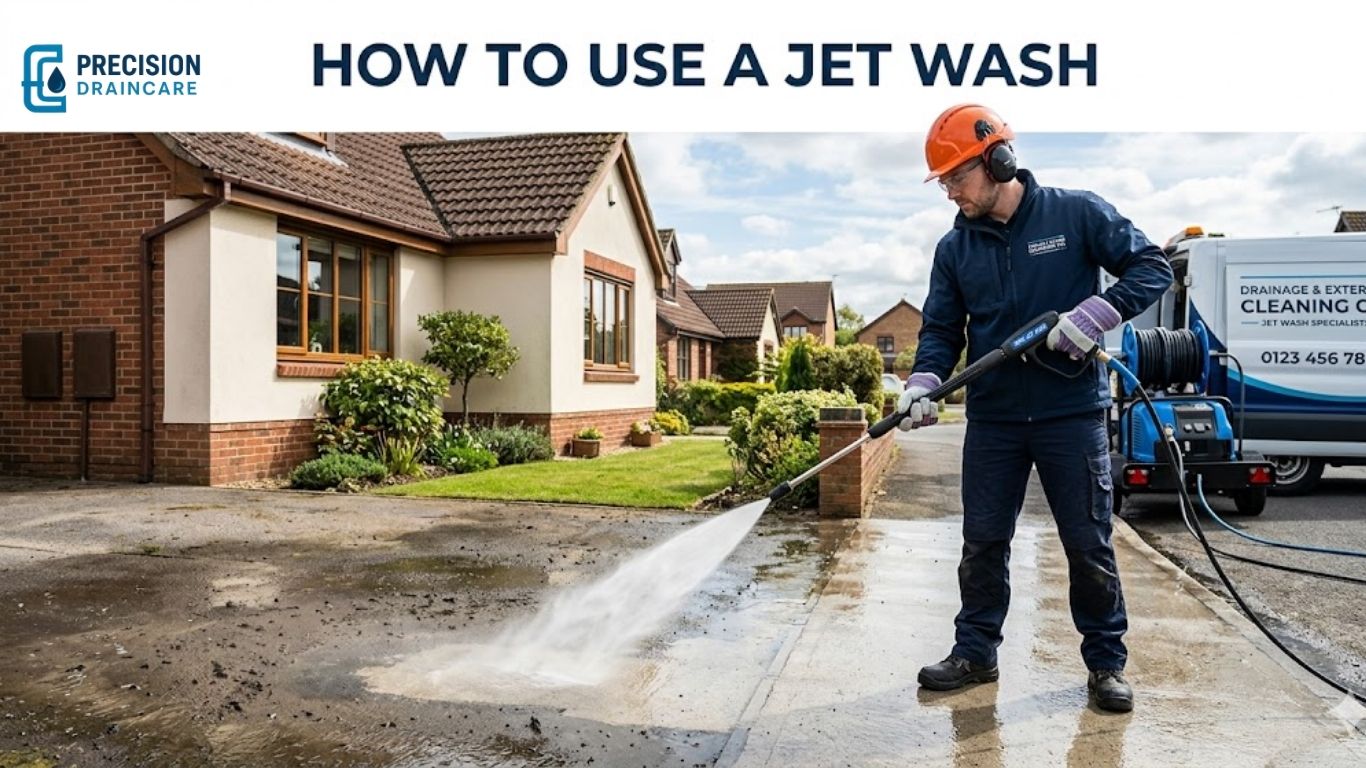
Cleaning your outdoor spaces might seem like a massive chore, but it does not have to take all weekend. If you want to transform your grimy patio, dirty driveway, or moss-covered decking, learning how to use a jet wash is the ultimate solution. A pressure washer takes the back-breaking scrub work out of your hands, using high-pressure water to blast away years of dirt in minutes.
However, if you are a beginner, that powerful stream of water can feel intimidating. Using too much pressure or the wrong nozzle can permanently damage your property or cause injury. That is why we put together this complete pressure washing guide.
Whether you want to spruce up your garden furniture for summer or need to figure out how to clean a driveway with a jet wash, this article covers everything you need to know. We will walk you through the setup, outline crucial safety tips, and share expert techniques so you can clean like a professional.
What Is a Jet Wash?
A jet wash, frequently called a pressure washer, is a mechanical device that connects to your standard garden hose and forcefully accelerates the water pressure. It works by pulling water into a motorized pump, which then squeezes the water through a narrow hose and out of a specialized nozzle. This process multiplies your standard tap water pressure by up to eighty times.
People use jet washes because this immense pressure easily cuts through stubborn grime, mold, mildew, algae, and loose paint. Instead of spending hours scrubbing surfaces with harsh chemicals and a stiff brush, the concentrated water stream lifts dirt instantly.
You will commonly see homeowners and DIY enthusiasts using pressure washers around their properties for a variety of tasks. Some of the most popular uses include:
- Cleaning concrete and asphalt driveways
- Removing algae and moss from wooden decking
- Washing cars, vans, and motorcycles
- Revitalizing brick walls and garden paths
- Cleaning outdoor garden furniture and fences
- Prepping surfaces before painting or staining
Things You Need Before Using a Jet Wash
Before you pull the trigger and start blasting away dirt, you need to gather the right equipment. Proper preparation ensures you get the best results while keeping yourself and your property safe.
Essential Safety Gear
A jet wash is not a toy. The water stream can easily slice through skin or kick up dangerous debris. Always wear safety goggles to protect your eyes from flying rocks and dirt. Put on sturdy, closed-toe shoes or heavy-duty rubber boots. Never pressure wash in sandals or bare feet. Long trousers are also highly recommended to protect your legs from ricocheting debris.
Water Connection
You need a reliable water supply. Connect your machine to a standard outdoor tap using a heavy-duty garden hose. Ensure your hose is free of kinks and leaks. Most manufacturers recommend a water supply that flows at least two gallons per minute. If your tap lacks sufficient flow, the pump could suffer permanent damage.
Power Source
Jet washes come in two main types: electric and gas-powered. Electric models require an outdoor-safe, grounded power outlet. Always check your extension cord to ensure it can handle the electrical load and is rated for outdoor use. Gas-powered machines require fresh fuel and engine oil before starting.
Cleaning Detergents
While high-pressure water does most of the heavy lifting, using the right cleaning detergent speeds up the process and improves the results. Choose a specialized soap designed for pressure washers. Never use household bleach or standard dish soap, as these can corrode the internal parts of your machine and harm your surrounding plants.
Suitable Nozzle Types
Understanding your nozzles is the most important part of our jet wash cleaning guide. Nozzles determine the width and power of the water stream. They are typically color-coded for easy identification:
- Red (0-degree): Shoots a pinpoint stream of water. This is extremely powerful and can damage wood or concrete. Use it rarely and with extreme caution.
- Yellow (15-degree): A heavy-duty nozzle for stripping paint and removing tough stains from hard concrete.
- Green (25-degree): The most versatile nozzle. Perfect for washing patios, driveways, and brickwork.
- White (40-degree): A wide, gentle spray ideal for washing cars, windows, and delicate garden furniture.
- Black (Soap nozzle): Operates at very low pressure to apply cleaning detergents to your surfaces.
How to Use a Jet Wash Properly
Once you have your gear ready, it is time to get to work. Following a proper step-by-step method guarantees a deep clean without damaging your surfaces. Here is the best way to use a jet wash.
1. Setting Up the Machine
Place your pressure washer on a flat, stable surface. If you are using a gas-powered unit, check the oil and fuel levels. For electric models, plug the power cord into a properly grounded outdoor outlet. Attach the high-pressure hose to the machine and securely fasten the spray wand to the other end.
2. Connecting the Water Supply
Connect your garden hose to your outdoor tap and the water inlet on the machine. Turn the tap on completely. Before turning the machine on, point the wand in a safe direction and squeeze the trigger. Hold it for about thirty seconds. This bleeds trapped air out of the system. Starting the machine with air in the pump can destroy the motor.
3. Choosing the Correct Pressure Setting
Select the right nozzle for your task and snap it securely into the end of the wand. If your machine features an adjustable pressure dial, start on the lowest setting. You can always increase the pressure if the dirt refuses to lift, but you cannot undo damage caused by too much force.
4. Testing the Pressure Safely
Never point the wand directly at the center of the surface you want to clean right away. Find an inconspicuous corner to test your spray. Squeeze the trigger and assess how the material handles the pressure. If the wood splinters or the concrete chips, stop immediately and switch to a wider nozzle or lower the pressure setting.
5. Cleaning Techniques
For the best results, work in small, manageable sections. Keep your wrists firm to manage the kickback when you squeeze the trigger. Move the wand in smooth, sweeping motions, overlapping each stroke slightly to avoid leaving unwashed streaks behind.
6. Proper Spraying Angle
Never aim the water directly at a 90-degree angle to the surface. This pushes dirt deeper into the material and increases the risk of damage. Instead, hold the wand at a 45-degree angle. This allows the water to get under the dirt and push it away from you.
7. Distance from Surfaces
Start with the tip of the wand about 18 inches away from the surface. Gradually bring it closer until you find the sweet spot where the dirt lifts without damaging the material. Generally, you should never bring the nozzle closer than 12 inches to the surface.
8. Rinsing Methods
If you used detergent, switch to a low-pressure nozzle to rinse it away. Start from the highest point and work your way down so the dirty water flows away naturally. Continue rinsing until the water runs completely clear.
How to Use a Jet Wash on Different Surfaces
Different materials require completely different approaches. Here are essential jet washing tips for common household surfaces.
Patios
Learning how to jet wash a patio is incredibly satisfying. Sweep the area first to remove loose leaves and twigs. Apply a patio-specific detergent using your black soap nozzle and let it sit for ten minutes. Switch to a 25-degree (green) nozzle. Hold the wand at a 45-degree angle and sweep back and forth. If you have a block paving patio, avoid spraying directly into the joints, as this will blast out the essential jointing sand.
Driveways
If you want to know how to clean a driveway with a jet wash, you need power. Driveways take a beating from car tires, oil leaks, and weather. Use a heavy-duty degreaser on stubborn oil stains first. A 15-degree or 25-degree nozzle works well here. For the most efficient clean, consider buying a surface cleaner attachment. This large, circular tool hovers over the concrete, cleaning a wide area evenly and preventing zebra stripes.
Decking
Wood requires a gentle touch. Using too much pressure will gouge the fibers and splinter the boards. Use a wide 40-degree (white) nozzle and keep the wand moving constantly. Always spray in the same direction as the wood grain. If you stop moving while the trigger is engaged, you will leave a permanent mark on the wood. Let the decking dry completely for a few days before applying any new stain or sealant.
Brick Walls
Brick is durable, but the mortar holding it together can be fragile. Inspect your walls for cracks or loose mortar before you begin. Patch any damaged areas and let them cure before washing. Soak the brick with water from the bottom up to prevent streaking, then apply detergent. Rinse from the top down using a 25-degree nozzle, keeping your distance to preserve the mortar joints.
Cars
You absolutely can use a pressure washer to clean your vehicle, provided you take precautions. Use the widest 40-degree nozzle available. Keep the wand at least two feet away from the paintwork to avoid peeling the clear coat. Use a snow foam lance to cover the car in thick suds, let it loosen the road grime, and rinse it off gently. Avoid spraying directly at window seals, tires, and the engine bay.
Garden Furniture
Plastic, resin, and metal garden furniture look brand new after a quick wash. Use a 40-degree nozzle to prevent etching the plastic or chipping the paint on metal chairs. If your furniture has cushions, remove them first. Spray from top to bottom, paying special attention to the areas under the seats where spiders and cobwebs like to hide.
Common Mistakes to Avoid When Using a Jet Wash
Even with the best intentions, beginners often make a few critical errors. Avoiding these pitfalls will save you money and frustration.
The most common mistake is using far too much pressure. It is tempting to snap on the red 0-degree nozzle to blast away a tough stain, but this concentrated stream acts like a water laser. It easily slices through tires, gouges concrete, and destroys wood siding. Always default to the widest nozzle that gets the job done.
Another frequent error is spraying too closely to the surface. Bringing the nozzle an inch away from the material significantly increases the impact force. If the dirt is not moving, do not bring the wand closer. Instead, apply a suitable cleaning solution to break down the grime chemically, then wash it away.
Finally, many people damage their property by spraying water upwards under lap siding or roof shingles. Always aim downwards or straight ahead. Spraying upwards forces water behind the protective exterior of your home, causing hidden mold growth and structural rot.
Jet Wash Safety Tips
Pressure washer safety tips are not just suggestions; they are vital rules to prevent severe injuries.
First, consider electrical safety. If you use an electric model, keep all plugs and extension cord connections dry. Never stand in a puddle of water while operating an electrical unit. Ensure your outlet has a functioning Ground Fault Circuit Interrupter (GFCI) to prevent electric shocks.
Next, focus on safe handling. Never leave a running pressure washer unattended. If you need to step away, turn the machine off and squeeze the trigger to release the built-up pressure in the hose. Never point the spray wand at yourself, another person, or a pet. The water can cause deep lacerations and inject bacteria under the skin, requiring immediate medical attention.
Always keep children and pets securely indoors while you work. The loud noise can frighten animals, and kids are naturally drawn to the splashing water. Also, be mindful of your footing. Wet driveways and patios become incredibly slippery, especially when you agitate the algae and soap. Wear slip-resistant shoes and walk carefully.
Benefits of Using a Jet Wash
Investing time into learning how to use a pressure washer pays off massively. The most obvious benefit is the sheer amount of time you save. What would take an entire weekend with a scrub brush and a bucket of soapy water takes less than an hour with a jet wash.
It also dramatically improves the appearance of your property. Removing a winter’s worth of grime instantly boosts your home’s curb appeal, making it look well-maintained and inviting.
More importantly, routine washing prevents long-term damage. Moss, algae, and mold trap moisture against your brickwork and wood decking. Over time, this constant dampness causes rot and structural decay. By washing these contaminants away regularly, you extend the lifespan of your property’s exterior materials.
Jet Wash Maintenance Tips
Taking care of your equipment ensures it will run smoothly for years to come. When you finish cleaning, turn off the machine and disconnect the water supply. Point the wand in a safe direction and squeeze the trigger to relieve the system pressure.
Before putting the machine away, clean it thoroughly. Wipe down the exterior to remove any splashed mud or detergent residue. Check your high-pressure hose for any bulges, cuts, or abrasions. A damaged hose is a massive safety hazard and should be replaced immediately. Also, inspect the nozzles to ensure they are not clogged with tiny grains of sand.
Proper storage is critical, especially during the winter. If water freezes inside the pump, the expanding ice will shatter the internal components. Before storing the machine for the cold months, use a specialized pump antifreeze. This lubricant forces all the remaining water out of the system and protects the internal seals from drying out and cracking. Store the machine in a dry, frost-free garage or shed.
Frequently Asked Questions
Can a jet wash damage concrete?
Yes, despite its hardness, concrete can suffer damage from improper jet washing. If you use a high-pressure 0-degree nozzle or hold the wand too close to the surface, the water can strip the top layer of cement, exposing the rough aggregate underneath. Always use a 25-degree nozzle and keep the wand at least 12 inches away from the surface.
What pressure setting should I use?
The ideal pressure setting depends entirely on the surface you are cleaning. For soft woods and cars, use a low pressure (around 1200 to 1500 PSI) and a wide 40-degree nozzle. For robust surfaces like concrete driveways and brick patios, you can use higher pressures (2500 to 3000 PSI) with a 25-degree nozzle. Always start low and increase slowly.
Do I need detergent for jet washing?
While high-pressure water handles a lot of dirt on its own, using a detergent makes the job faster and more effective. Detergents break down grease, oil, and stubborn mold at a molecular level, allowing the water to sweep them away easily. This means you do not have to rely on extreme pressure, which protects your surfaces from accidental damage.
How often should I pressure wash my patio?
For most homeowners, pressure washing a patio once a year is perfect. The best time to do this is in the early spring. This removes the algae, moss, and dirt accumulated over the wet winter months, prepping your outdoor space for summer enjoyment. Washing too frequently can erode the stone face or wash away the jointing sand.
Can I use a jet wash on a car?
Yes, you can safely wash a car with a pressure washer if you use the right technique. You must use a wide 40-degree nozzle and maintain a distance of at least two feet from the vehicle. Avoid spraying directly at the window seals, door hinges, and tires. Using a snow foam attachment is highly recommended to lift dirt before rinsing.
Is jet washing safe for wooden decking?
Jet washing wooden decking requires caution, but it is safe when done correctly. Wood is a soft material that splinters easily under high pressure. Use a fan nozzle (at least 40 degrees) and keep the pressure under 1500 PSI. Always sweep the wand in the direction of the wood grain and maintain a steady motion to avoid leaving permanent stop-marks on the boards.
Conclusion
Learning how to use a jet wash safely and effectively changes the way you maintain your home. By understanding how to select the right nozzles, manage your water pressure, and apply the correct techniques for different surfaces, you can restore your property to its former glory in record time.
Remember that safety and patience are your best tools. Always wear your protective gear, test your pressure on a small area first, and prioritize a chemical clean over damaging high force. Grab your gear, head outside, and enjoy the incredibly satisfying process of blasting away the grime to reveal a beautifully clean home.
